
King and Queen 72-Hour Release Status
No official King and Queen County 72-hour release feed was documented in Middle Peninsula Regional Security Center navigation or targeted source review as of August 8, 2026. MPRSC publishes a Current Inmate Listing for people shown in custody when the page is viewed. It does not publish a rolling three-day archive. The King and Queen County Sheriff’s Office is the local law-enforcement office, but MPRSC operates the regional adult jail and holds the jail exit record.
Do not copy the current list and relabel it as recent releases. That would omit everyone who left the roster and would give no valid start or end time for the supposed 72-hour window. It would also erase the difference between release and transfer. A useful three-day review instead collects dated evidence from MPRSC, the courts, and VINE for the precise period being checked.
Check King and Queen 72-Hour Releases
Set the period before searching. A rolling 72-hour window starts exactly three days before the check, while “the weekend” may begin on Friday and end on Monday. A holiday interval may be longer. Because MPRSC publishes neither kind of released-person view, write down the date and time of the check and seek records that fall inside that defined span.
- Open the official MPRSC Current Inmate Listing and look for the exact person.
- If the person is listed, treat that as current-custody information, not as proof about the prior three days.
- If the person is absent, search the Virginia court case system for a dated bond, dismissal, sentence, or release-related order.
- Check Virginia Jail VINE for a custody event associated with the matching person and facility.
- Ask MPRSC for the actual release date and time, release type, authority, and destination for the relevant booking episode.
- Place each verified event on the timeline, then exclude events outside the defined 72-hour span.
Use a booking number, date of birth, or case number when possible. Names alone can join the wrong person to the wrong event. The King and Queen County 24-Hour Release List workflow is better when only today or the last full day matters.
King and Queen 72-Hour Release Fields
The public MPRSC roster supplies several identity and admission fields. It supplies none of the exit data needed for a valid King and Queen County 72-hour release list. The distinction is visible in the source inventory below.
| Field | Use in a 72-hour review |
|---|---|
| Full Name | Displayed on the current list and useful as a lead, subject to identity matching. |
| Age, Race, Sex | Displayed as match aids; none establishes an exit event. |
| Admit Date | Displayed for a current custody episode, but it is not the release date. |
| Primary Charge | Found in application data or filtering; the charge does not state whether custody ended. |
| Actual Release Date and Time | Not displayed. Obtain the existing MPRSC release transaction. |
| Release Disposition | Not displayed. It is needed to distinguish bond, time served, transfer, and other exits. |
| Receiving Agency or Destination | Not displayed. It shows whether custody continued elsewhere. |
The MPRSC current-list page is the official public roster source available for the first check.
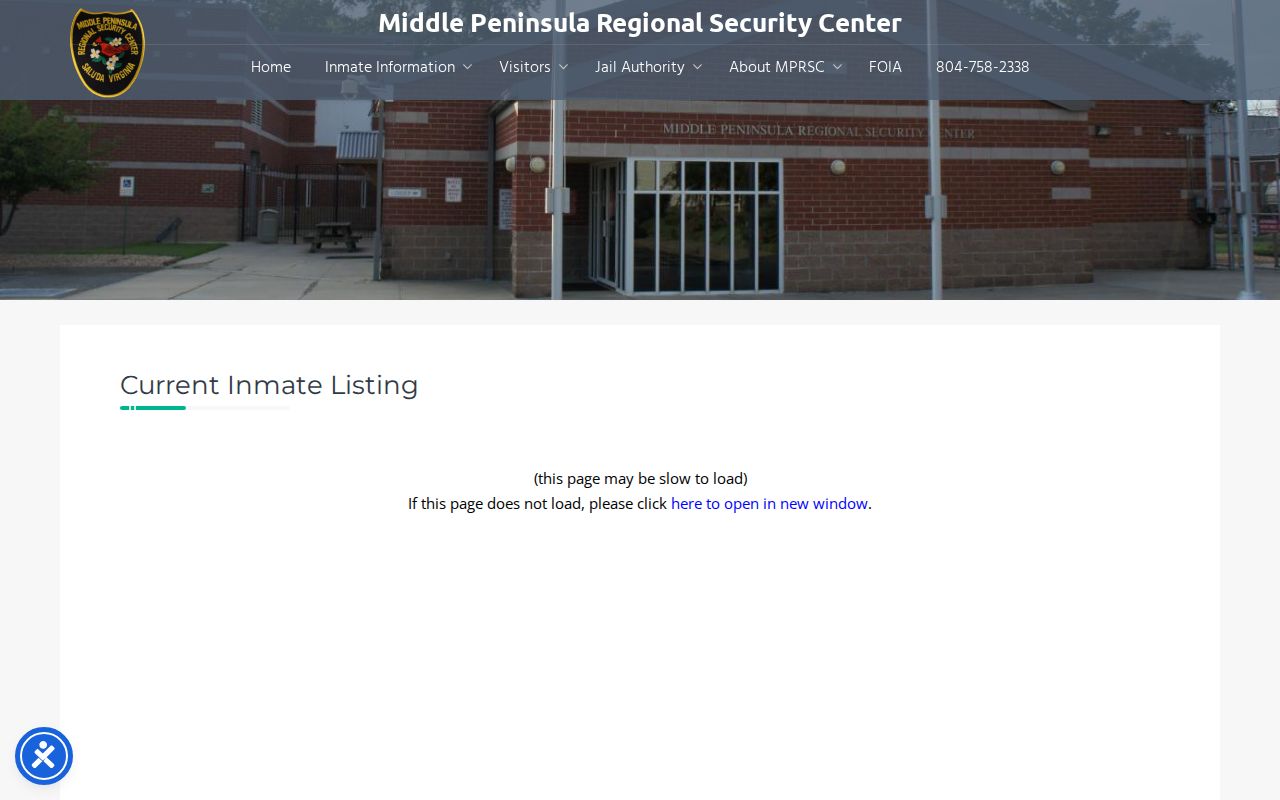
The image helps identify the correct starting system. Dated MPRSC release fields, not the screen alone, determine whether an event belongs inside the last 72 hours.
Note: Neither a roster refresh schedule nor a public post-release retention period was documented by MPRSC.
King and Queen Weekend Release Verification
A three-day window often reaches across a weekend. That makes it more forgiving than a same-day check, but it does not cure missing data. Court offices may not be open when the event occurs, and a new order may not yet be easy to obtain. King and Queen Circuit Court states that signed orders are mailed within five business days. The legal action, the facility transaction, and the date a document arrives can therefore be different points on the timeline.
Holidays create a similar issue. MPRSC does not publish a holiday release schedule, a universal jail-door release time, or a rule that every event appears in an online archive the next business day. Do not assume a Monday roster absence means a Saturday community release. The exit could have happened Friday, Sunday, or Monday, and it could have been a transfer rather than release to the community.
A weekend review should record three facts for each person: the court authority, the actual MPRSC exit date and time, and the disposition or destination. If one is missing, mark it as unverified. VINE can add a custody-status event, but it remains a notice from the participating source rather than the jail’s certified release record.
King and Queen Roster Release Gaps
MPRSC’s official secure page embeds or links to a direct current-list application that uses HTTP. Some browsers block that mixed content. The facility also warns that the list may load slowly and gives users a new-window route. This local technology quirk can make the roster appear empty or unavailable even though custody data still exists.
A failed screen is not a mass release. A missing name is not a dated release. The direct feed shows Admit Date but no Release Date, archive, exit reason, or photo. Even if someone saved several snapshots over three days, a disappearance would establish only that the name stopped appearing in those observations. It would not explain the cause or prove the time.
This is the distinctive data problem for King and Queen County 72-hour release checks. First retry the official new-window link. Then move to the MPRSC record, court case, and VINE event. If the record identifies another custodian, continue there. Technical absence and custodial departure are separate facts.
Obtain King and Queen Release Records
The strongest local evidence comes from MPRSC because it controls the regional booking and exit transaction. Its FOIA information identifies Andrea Kinser, 170 Oakes Landing Road, Saluda, VA 23149; 804-758-2338 extension 253; fax 804-758-4295; and ahogge@mprsc.org. A request can be sent by mail, email, fax, made by phone, or delivered in person. Written wording helps preserve the exact three-day scope.
Identify the person by full name, date of birth, booking number, and approximate admission date when known. Request existing records sufficient to show the actual release date and time, release type or disposition, releasing authority, and any receiving agency or transfer destination. Ask for electronic copies, segregable nonexempt portions, and an advance cost estimate. Do not demand a newly created “72-hour list” if the agency does not keep one.
MPRSC states an initial five-working-day response period and describes a possible seven-working-day extension through a written practical-impossibility notice. Actual costs can be charged, and a deposit may be required when an estimate exceeds $200. No flat release-record fee or fixed public retention term was documented.
Sheriff W. R. Balderson’s office can route requests for sheriff-created arrest or process records. It does not replace MPRSC as custodian of the regional jail exit transaction. Asking the agency that created each record preserves the three-day timeline and avoids treating an arrest record as proof of release.
- Release transaction
- The dated facility entry showing when and how a custody episode ended.
- Disposition
- The outcome recorded for the exit, such as bond, time served, or transfer.
- Transfer
- Movement from MPRSC to another jail, hospital, VADOC, ICE, or another custodian.
- Discharge
- The end of the applicable term or authority, which is not the same as every physical departure.
King and Queen Release Custody Lanes
A three-day search can cross agencies. King and Queen County local detainees normally enter MPRSC, but some later become state responsible. A name that leaves the regional roster and appears in the Virginia Department of Corrections locator most likely reflects movement into state authority, not community release. The actual MPRSC disposition should name that transfer.
| Custody lane | Where to verify the exit | Key limit |
|---|---|---|
| MPRSC local or regional custody | MPRSC release transaction, court record, and local-jail VINE event | The current roster has no released archive. |
| VADOC state authority | VADOC locator while active, dated release documents, or inactive-offender records | A regional-jail transfer into VADOC is not release. |
| Federal BOP custody | BOP locator and the federal case record | A BOP release concerns federal custody only. |
| ICE custody | ICE locator or ERO contact after a documented transfer | No ICE result does not prove release. |
The VADOC Inmate and Supervisee Locator covers current state custody or supervision and updates daily. It is not a permanent historical list of fully discharged people. A former prisoner still on parole or VADOC probation may remain visible after leaving prison. A person who completed all state supervision may require an inactive-offender records request.
Federal Bureau of Prisons and ICE searches are separate. Neither proves release from MPRSC. A local record that names a detainer or receiving agency keeps the timeline intact and directs the next check.
Build a King and Queen Release Timeline
Use one row or note for every event found during the three-day span. Record the source label exactly. “Admit Date” is not “Release Date.” A bond decision is not the jail-door exit. A VINE custody change is not an acquittal. A VADOC future release date is computed and can change. Exact labels protect the timeline from false conclusions.
- Admission or arrest date and the booking identifier
- Court order or disposition date and case number
- Actual physical release date and time from MPRSC
- Release type, authority, and destination
- Any later VADOC, BOP, ICE, or supervision event
When sources conflict, the facility record controls the local physical exit. The court explains legal authority. VINE gives a timely status event. A receiving agency confirms continued custody after transfer. Together, those records can establish whether the person belongs in the chosen 72-hour period and whether “released” means out in the community.
For a named person with an older or more complex path, the King and Queen County released-inmate lookup covers court, state, federal, supervision, and records-request routes beyond the three-day window.
Note: Date-stamp negative findings because MPRSC may change its public tools after the August 8, 2026 research review.